Building Sustainable TVET Ecosystems: 25 Years of Working in International TVET Reform
Why do some countries successfully transform their TVET systems while others, despite years of investment, technical assistance and well-intentioned reforms, struggle to achieve lasting change? And before the next round of donor investment begins, it is worth asking an uncomfortable question: are we building on what has already been created, or quietly burying previous work beneath another layer of reform?
After more than 25 years working alongside governments, regulators, employers and development partners, I have come to believe that the answer rarely lies in the technical design of qualifications, occupational standards or quality assurance systems. Successful TVET reform is never just about education. It is about understanding a country's ambitions, recognising its political and economic realities, respecting its culture, taking stakeholders on a shared journey and ensuring every decision ultimately creates better opportunities for people, particularly young people entering the workforce.
Too often, reforms are judged by the number of qualifications developed, policies written or institutions established. Yet their real success is measured by whether they are embraced, implemented and sustained long after external support has ended.
The following eight reflections are drawn from working alongside countries across Africa, the Middle East and Europe. They are not intended as universal truths, but as lessons that have repeatedly shaped my own thinking about what it really takes to build skills systems that create lasting change.

Reflection 1: Every Country Has Its Own Story
Every country has its own history, culture, institutions, political priorities, economic ambitions and labour market challenges. These shape not only what reforms are needed, but also how change can realistically be achieved. There is no universal blueprint for TVET reform.
When I begin a new assignment, my first question is rarely, "What qualifications need developing?" or "What quality assurance system should we introduce?" Instead, I ask, "What is this country trying to achieve, and how can its skills system help more young people become part of that future?" For me, that single question changes everything.
One of the earliest lessons I learned was to resist the temptation to begin with technical solutions. Too many international projects start with answers before fully understanding the challenge they are trying to solve. Qualifications, occupational standards and quality assurance are not objectives in themselves. They are simply tools to help countries achieve wider economic and social ambitions.
I have also learned that one of the greatest mistakes an international consultant can make is assuming that successful reforms from one country can simply be transferred to another. No two countries are the same. What works in one context may be ineffective, or even counterproductive, in another.
I have come to believe that the role of an international consultant is not to import solutions or replicate systems. It is to listen first, understand the country's ambitions, work alongside national partners and help build solutions that are technically robust, locally relevant and, most importantly, nationally owned.

Reflection 2. Understand the Economic Landscape Before Designing the Skills System
If Reflection 1 taught me to understand the country, Reflection 2 taught me to understand the economy it was trying to build.
Before I even arrive in a country, I spend time doing my homework. I read economic strategies, labour market intelligence, investment plans and international reports to understand where the country is today, where it wants to go and the challenges it faces along the way. Those early hours of research often shape the conversations that follow far more than any technical framework.
One lesson that has stayed with me is that a country's economic vision and its current labour market are rarely perfectly aligned. Governments may aspire to become leaders in artificial intelligence, renewable energy, advanced manufacturing, or the digital economy, while the workforce, infrastructure, and institutional capabilities needed to achieve those ambitions are still developing.
This changed the way I think about skills planning. Should qualifications respond to today's labour market, or should they help build the workforce needed for tomorrow's economy? I have come to believe they must do both.
Labour market intelligence helps bridge that gap. It distinguishes aspiration from reality, highlights where investment will have the greatest impact and helps governments set realistic priorities. No country can transform every sector at once, and successful reform often hinges on deciding what should come first.
Without that understanding, we risk building skills systems that are technically excellent but economically irrelevant. Good skills systems should not simply respond to economic change. They should help countries shape it.
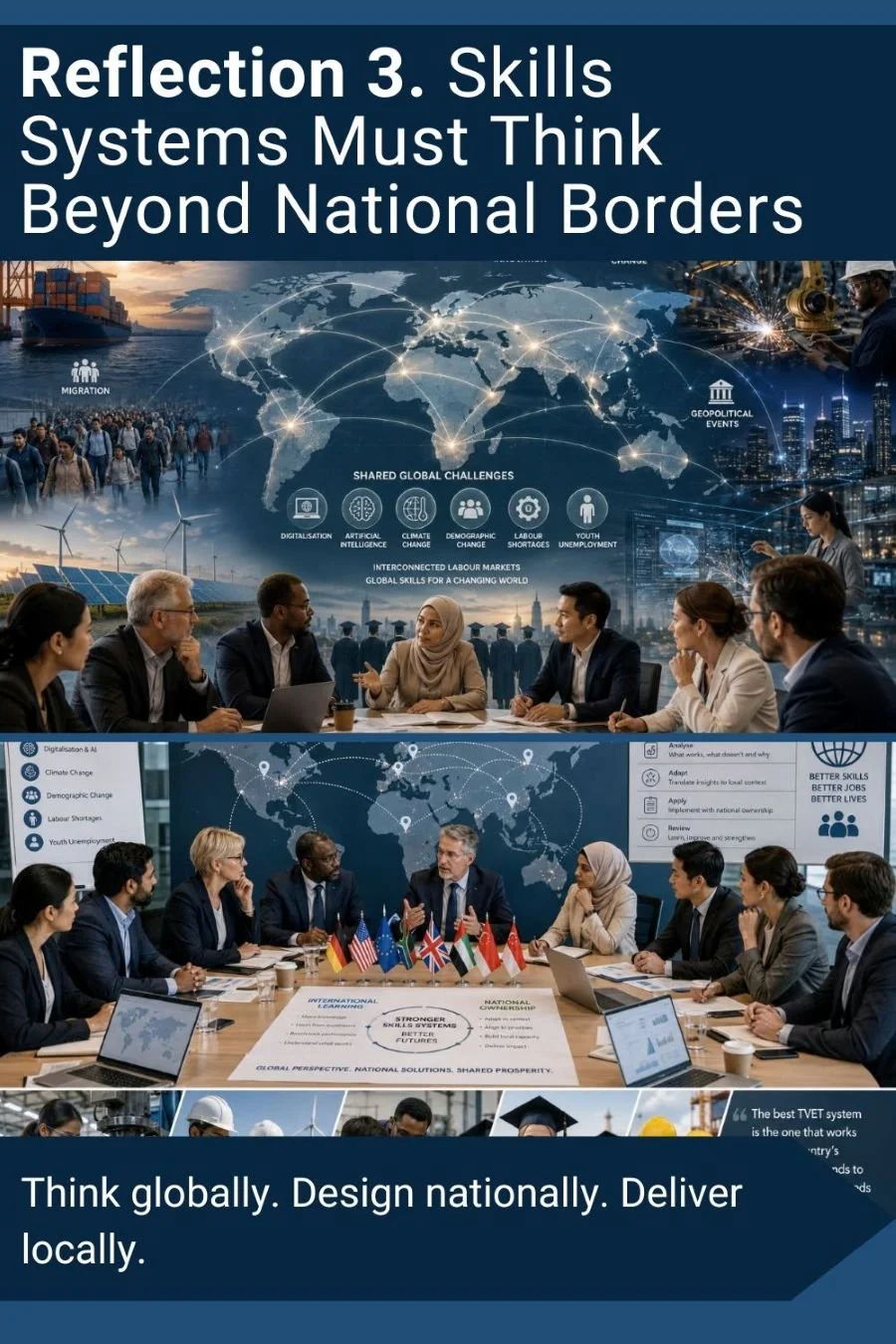
Reflection 3. Skills Systems Must Think Beyond National Borders
Working internationally has taught me that skills systems do not operate in isolation. Global supply chains, regional trade agreements, foreign investment, technological innovation, climate change, migration and geopolitical events all influence where businesses invest, how industries evolve and the skills employers require. A decision made on the other side of the world can quickly reshape labour market demand at home.
This has changed the way I think about TVET. Education systems may be organised nationally, but labour markets are increasingly interconnected. Preparing people only for today's local jobs is no longer enough. Skills systems must equip individuals to adapt, embrace lifelong learning and thrive in national, regional and international labour markets.
It has also taught me that while every country is unique, very few challenges are. Around the world, governments are responding to many of the same pressures, including digitalisation, artificial intelligence, climate change, demographic change, labour shortages and youth unemployment. The context may differ, but the underlying questions are often remarkably similar.
This is where international collaboration and benchmarking become invaluable. I am often asked, "Which country has the best TVET system?" My answer is always the same: the best TVET system is the one that works for that country's economy, responds to its labour market needs and gives young people the best possible opportunity to secure meaningful employment.
International benchmarking is not about finding a model to copy. It is about understanding how different countries have responded to similar challenges, learning from both their successes and failures, and adapting those lessons to national priorities. International experience should broaden perspectives, not prescribe solutions. The strongest reforms combine international learning with national ownership, creating skills systems that reflect a country's ambitions while preparing people for an increasingly interconnected world.
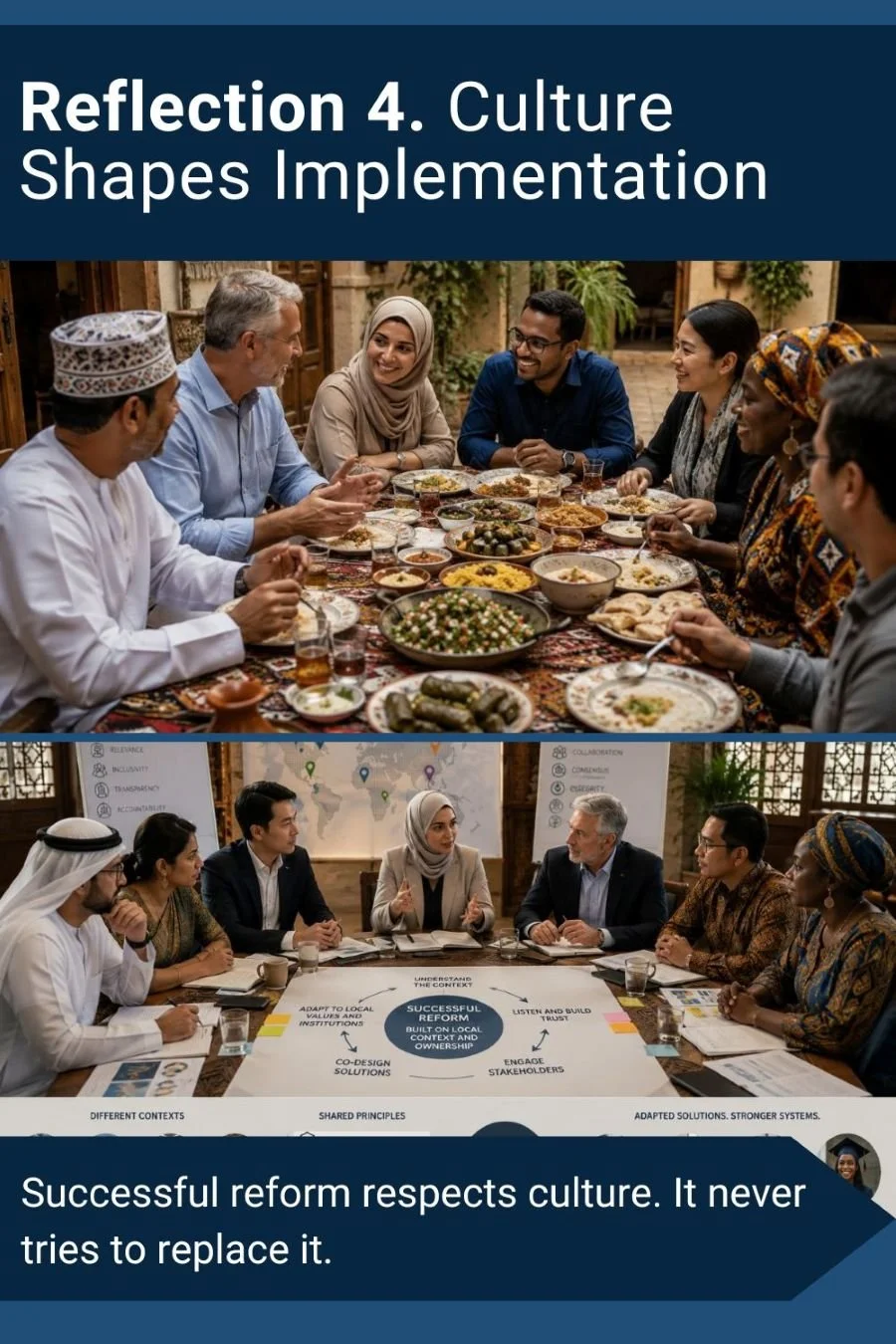
Reflection 4. Culture Shapes Implementation
I have learned repeatedly is that reforms succeed when they respect local culture rather than attempting to replace it.
One of the greatest privileges of working internationally has been experiencing different cultures. Those experiences rarely begin in a meeting room. They begin with the way people welcome you, how conversations unfold, how decisions are made and, as an enthusiastic explorer of local cuisine, very often around the dinner table. Food, hospitality, and informal conversations can reveal as much about a country as any strategy or policy document, because they provide insight into its values, relationships, trust, and the way people see the world.
Over the years, I have come to realise that understanding culture is not separate from reform. It is fundamental to it. Reform is often presented as a technical exercise. In reality, it is a human one.
Every country has its own way of building consensus, engaging employers, making decisions and implementing change. These differences are not barriers to reform. They are the foundation upon which successful reform must be built.
The technical principles behind qualifications, quality assurance or governance may be familiar wherever you work, but implementation is always shaped by culture. That is why I have learned that listening is every bit as important as technical expertise. Understanding who influences change, how trust is built, and what motivates people is often the difference between reforms adopted and those that remain on paper.
Successful reform is not about changing a country's culture to fit an imported system. It is about shaping the system so that it reflects the country's own values, institutions and way of working.
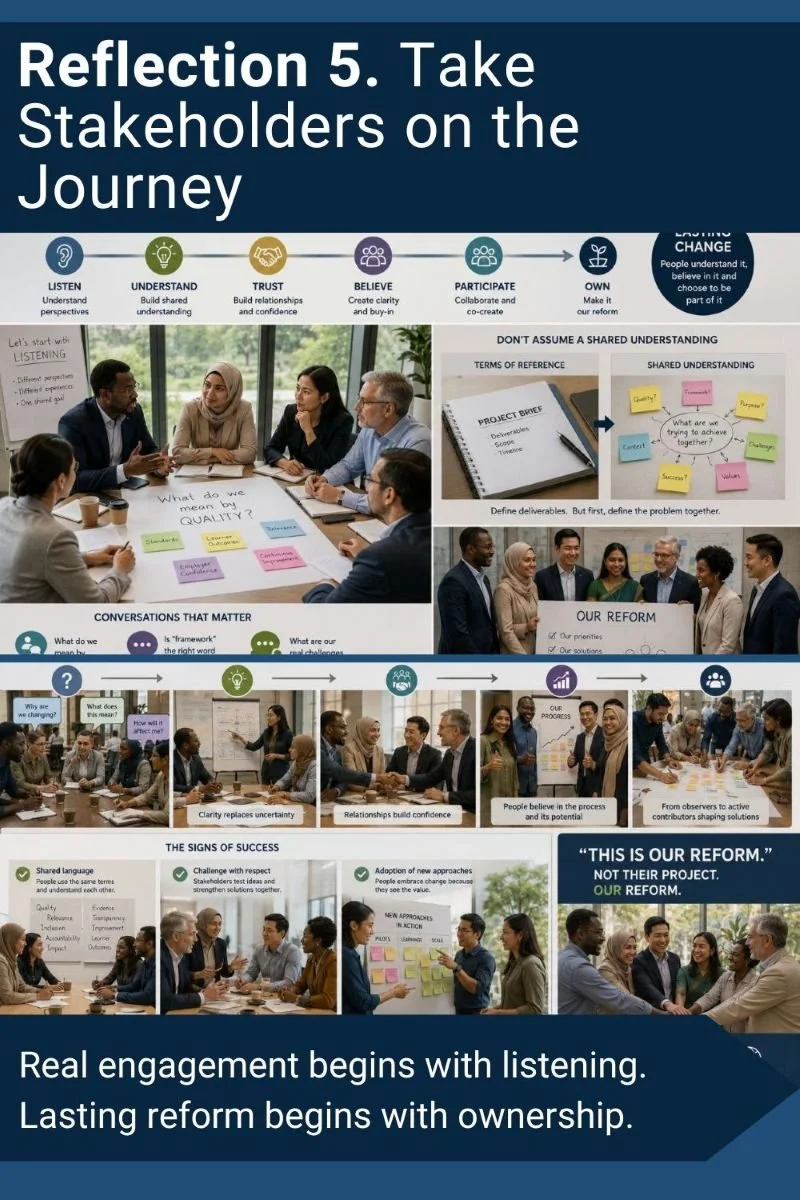
Reflection 5. Take Stakeholders on the Journey
I have learned that stakeholder engagement is not an activity. It is a journey. Too often, projects measure success by the number of workshops delivered or consultations completed. Real success is when people understand the reform, believe in it and choose to become part of it.
Also, never assume that everyone begins with the same understanding. A Terms of Reference or project brief may define the deliverables, but it does not create a shared understanding of the problem. I have worked on projects where the first discussion was not about designing a quality assurance system, but about agreeing on what we actually meant by quality. On another project, stakeholders questioned whether the word "framework" reflected what they were trying to achieve. Those conversations were not distractions. They were the starting point.
Real engagement begins with listening.
People naturally ask, Why are we changing? What does this mean? How will it affect me? As understanding grows, trust develops, confidence increases, and stakeholders begin to see themselves as contributors rather than observers.
For me, the real signs of success are often the smallest. It is when stakeholders begin to use the same language, challenge one another with shared principles, and adopt new approaches because they genuinely see their value. That is when I know the reform is beginning to take root.
The most successful projects are those where people stop referring to "the government's project", "the donor's project", or "the consultant's project" and say, "This is our reform." That is the moment when stakeholder engagement becomes stakeholder ownership, and lasting change becomes possible.
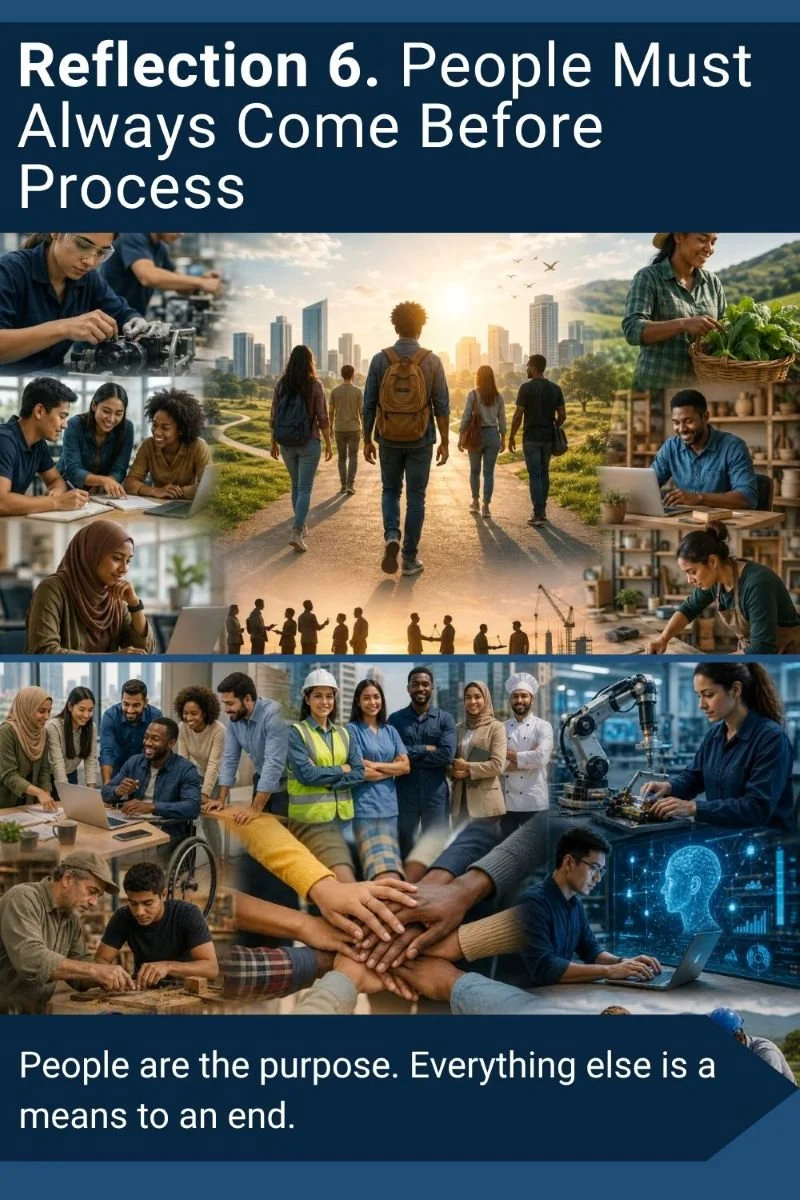
Reflection 6. People Must Always Come Before Process
I have never lost sight of the fact that qualifications, occupational standards and quality assurance are not the objective. They are simply tools to achieve something far more important.
The real objective is creating opportunities for people.
Every reform should answer a simple question: Will this improve people's lives? Will it help young people gain the knowledge, skills and confidence to find meaningful work, build successful careers or create employment for others?
The answer will differ from country to country. In some economies, the priority is preparing young people for a growing private sector. In other contexts, where formal employment is limited, or the public sector remains the largest employer, entrepreneurship and self-employment become equally important pathways to prosperity. A successful skills system prepares people for the opportunities that exist today while helping create the opportunities of tomorrow.
Opportunity must also be inclusive. A country's greatest asset is its people, all of its people. Women, people with disabilities and disadvantaged communities should all be able to see themselves in the opportunities created through skills reform. Inclusive skills systems are not only fairer but also stronger.
Technology will continue to reshape the world of work, but it will not replace the need for skilled people. Artificial intelligence and digitalisation will change how many occupations are performed, yet economies will always depend on human expertise, judgement, creativity and service. The challenge is not choosing between people and technology. It is preparing people to thrive alongside it.
In many of the countries where I have worked, TVET is not simply a pathway into employment. It is a pathway out of poverty. It gives people the opportunity to build a better future for themselves, support their families and contribute to their communities.
Ultimately, the greatest investment any country can make is in its people. If our reforms do not create opportunities, strengthen human capital and improve lives, then even the most technically impressive solutions deserve to be questioned.
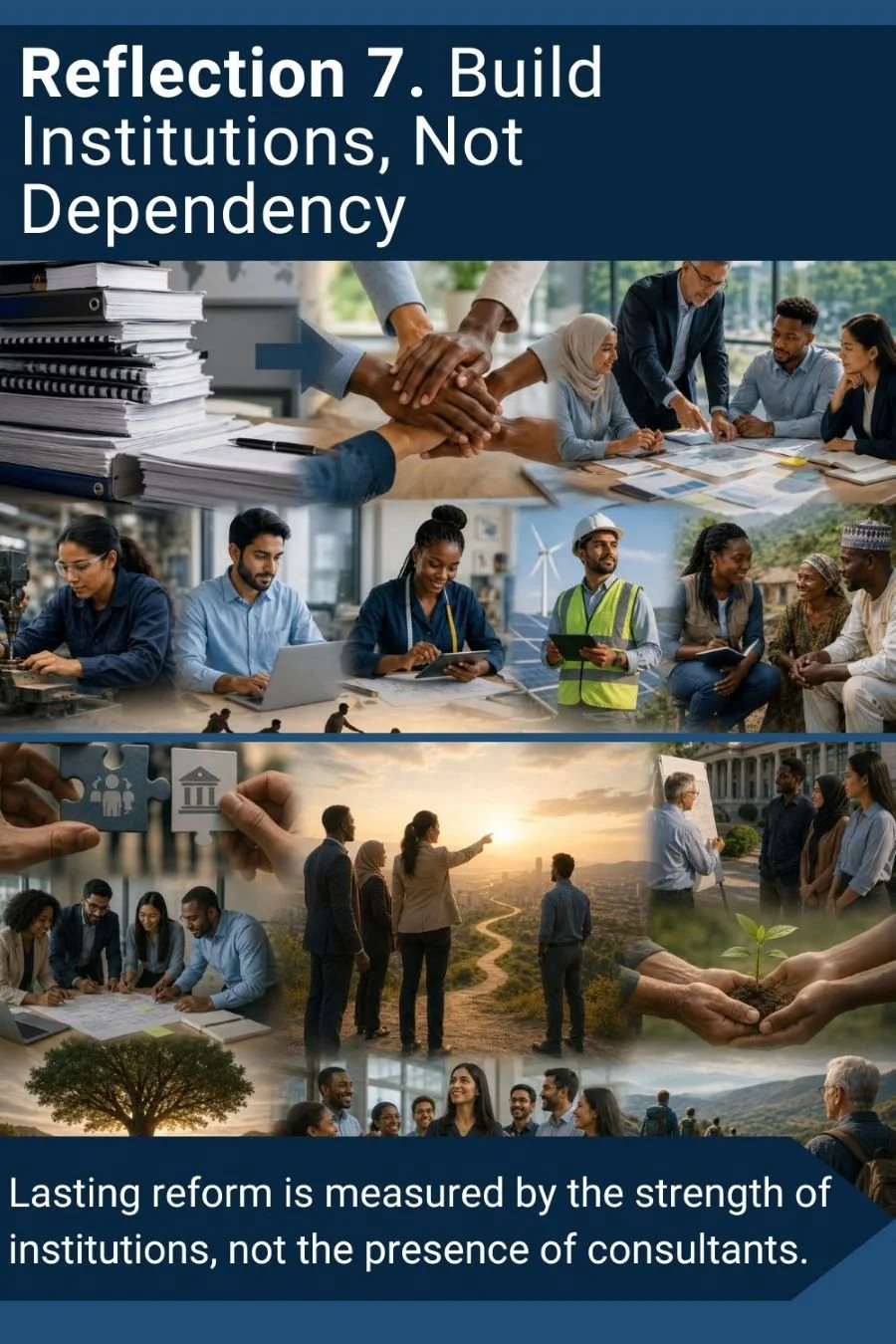
Reflection 7. Build Institutions, Not Dependency
One of the biggest lessons I have learned is that documents do not implement themselves. Throughout my career, I have seen countries invest enormous time and resources developing policies, qualifications frameworks, occupational standards, quality assurance systems and implementation plans. These documents are important, but on their own, they change very little.
Real reform depends on governance.
For me, good governance is not about creating more committees or adding layers of bureaucracy. It is about providing clarity, building trust and giving people the responsibility, autonomy and confidence to make informed decisions. Whether I am leading an international project or contributing as part of a multidisciplinary team, I have always believed that the best results come from trusting people to do what they do best while holding them accountable for their decisions.
One question I often ask is, "Who will still be leading this reform five years after the project has ended?" If the answer depends on external consultants or donor funding, then the foundations are probably not yet strong enough. Sustainable reform depends on capable institutions, empowered leaders and governance arrangements that continue to evolve long after external support has ended.
For me, one of the greatest measures of success is reaching the point where countries no longer need me because the knowledge, capability and confidence have become embedded within their own institutions. That is when I know the reform has become theirs rather than mine.
Strong governance is not about producing better paperwork. It is about developing stronger institutions, empowering people to lead with confidence and creating reforms that continue to improve long after the project has finished.
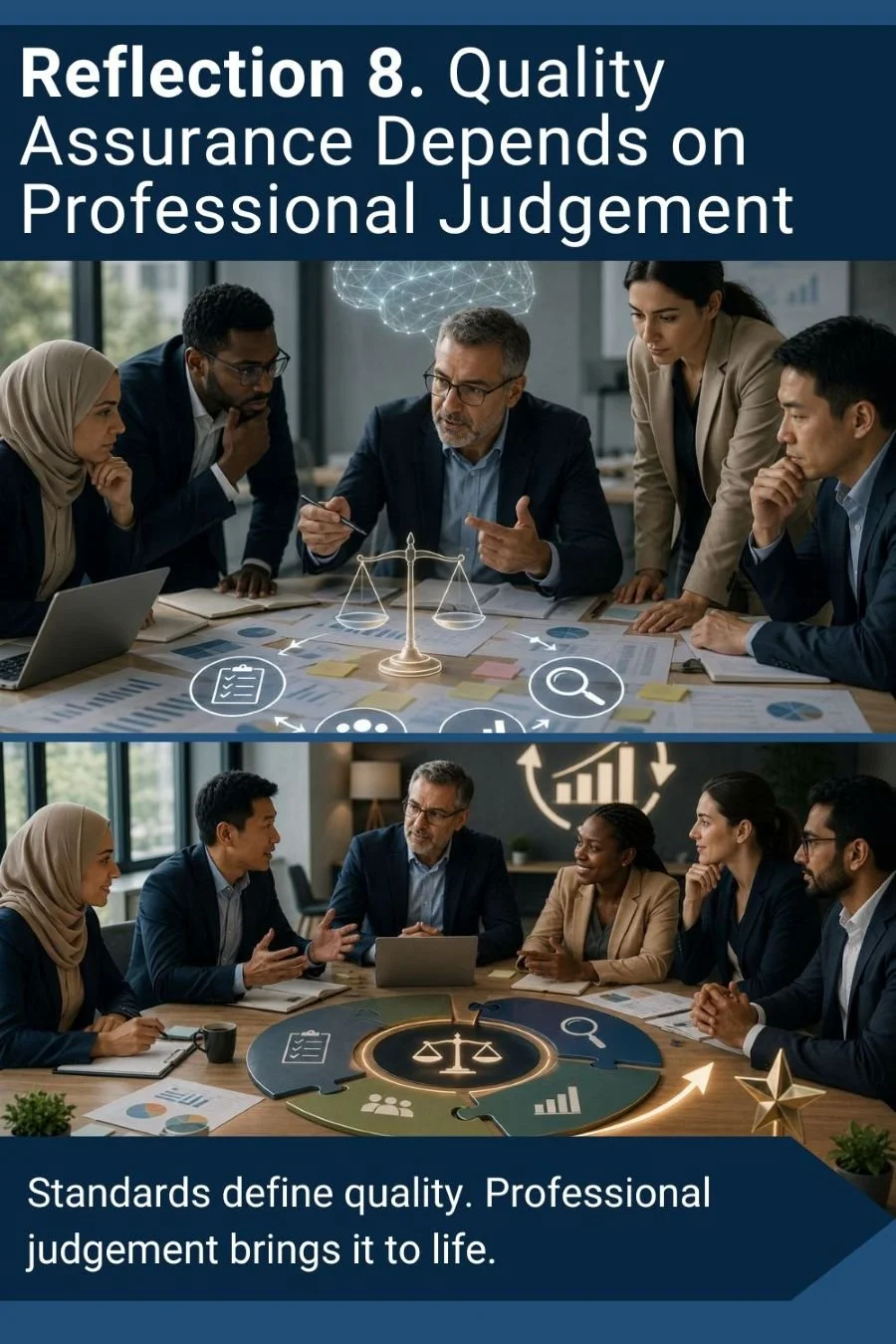
Reflection 8. Quality Assurance Depends on Professional Judgement
I have come to realise that quality assurance is not simply something we do. It is a way of thinking. It should underpin every decision we make, from designing qualifications to evaluating evidence and driving continuous improvement.
One of the biggest misconceptions is that quality assurance is simply about checking compliance. Standards, criteria and evidence provide the foundation, but they rarely provide the whole answer.
Quality depends on professional judgement.
Evidence never speaks for itself. It must be interpreted, challenged and understood in context. Compliance tells us whether something exists. Professional judgement tells us whether it works and whether it is making a meaningful difference.
Over the years, I have learned that good judgement is built through knowledge, experience, curiosity and collaboration. It requires us to ask good questions, challenge assumptions and remain open to different perspectives. There is rarely a single right answer. There are better judgements supported by stronger evidence.
This is why moderation, calibration and professional dialogue matter so much. They strengthen judgement, reduce bias and build confidence in decision-making. For me, healthy professional debate is not a sign of disagreement. It is one of the strongest indicators of a mature quality culture.
Ultimately, quality assurance is not about finding reasons to approve or reject. It is about recognising excellence, encouraging innovation and creating a culture where individuals and organisations continually strive to improve. The most successful providers do not pursue quality simply to satisfy regulators. They pursue it because it strengthens their organisation, benefits their learners and makes them more competitive.
Standards provide the direction. Evidence provides the foundation. Professional judgement drives improvement.
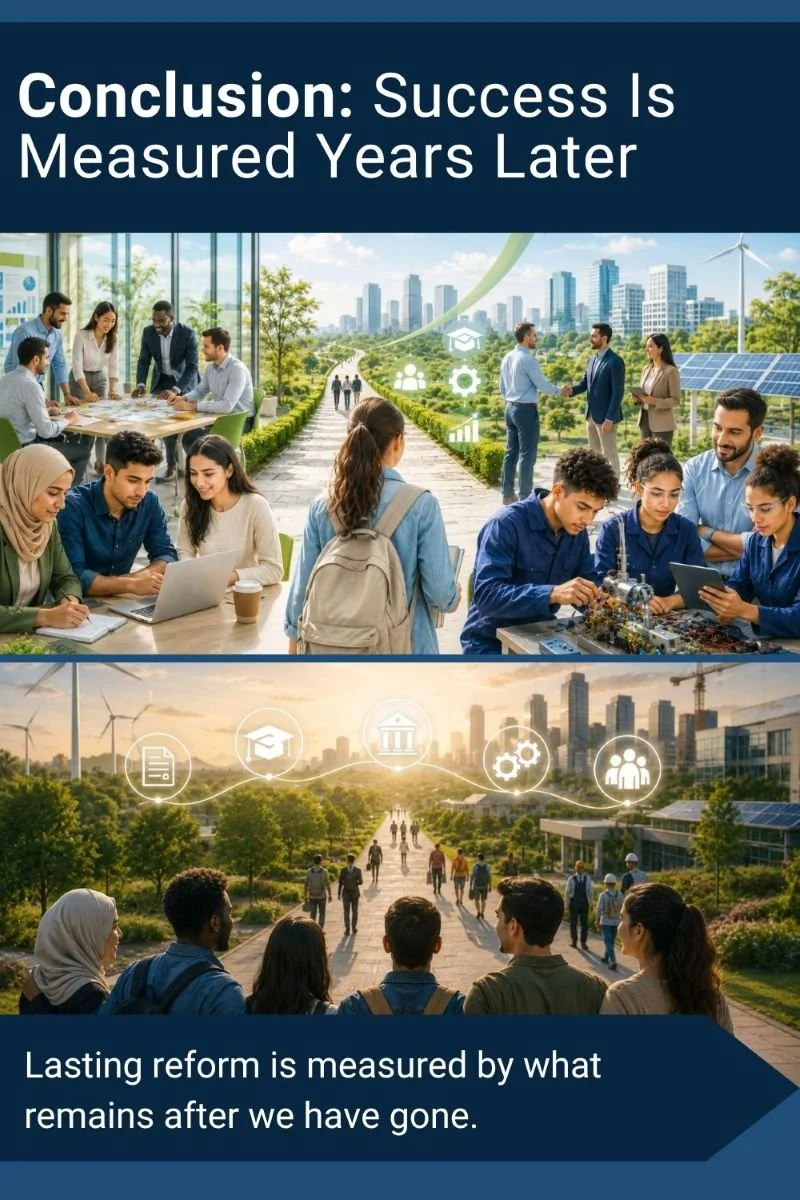
Conclusion: Success Is Measured Years Later
Perhaps the greatest lesson I have learned is that the true measure of success is never the launch event, the final workshop or the submission of the final report. Those are important milestones, but they are not the destination.
Real success is measured years later.
It is seeing institutions continue to lead with confidence because the knowledge and capability have become embedded within their own people. It is seeing qualifications continue to evolve as economies change. It is seeing employers remain engaged because they recognise the value of the skills system. It is seeing quality become part of everyday practice rather than an external requirement. Above all, it is seeing people, particularly young people, benefiting from opportunities that did not previously exist.
Looking back over the years, I have come to realise that every framework, qualification, policy and reform is simply a means to an end. The real purpose has never been to produce better documents. It has always been to create better opportunities for people.
If there is one message I would leave with anyone working in TVET, it is this: never lose sight of why we do this. Our role is not simply to design better systems. It is to help countries build the capability to grow their economies, strengthen human capital and create opportunities that improve people's lives long after we have gone.
Ultimately, successful TVET reform is not measured by the systems we create. It is measured by the lives those systems help transform. Because, ultimately, TVET has never been about frameworks, standards or quality assurance.
It has always been about people.
The countries I've worked with have taught me far more than I could ever hope to teach them.