Green Jobs or Greening Skills? Rethinking Competence in an Ecological Economy
Over the past decade, policymakers and educators have increasingly focused on preparing workers for the rise of "green jobs". From renewable energy technicians to circular economy specialists, the narrative suggests that the transition to a sustainable economy will create entirely new occupations.
While this framing highlights the growing importance of sustainability, it may also be too narrow. Environmental impact is not limited to a small group of specialised roles. Decisions made by engineers, construction workers, technicians, logistics managers and designers all influence how resources are used and how systems affect the environment.
So the real question may not be how many green jobs we create, but whether we are greening the skills required across all jobs. If the ecological transition touches every sector, then education and training systems may need to rethink not just occupations, but how competence itself is defined.
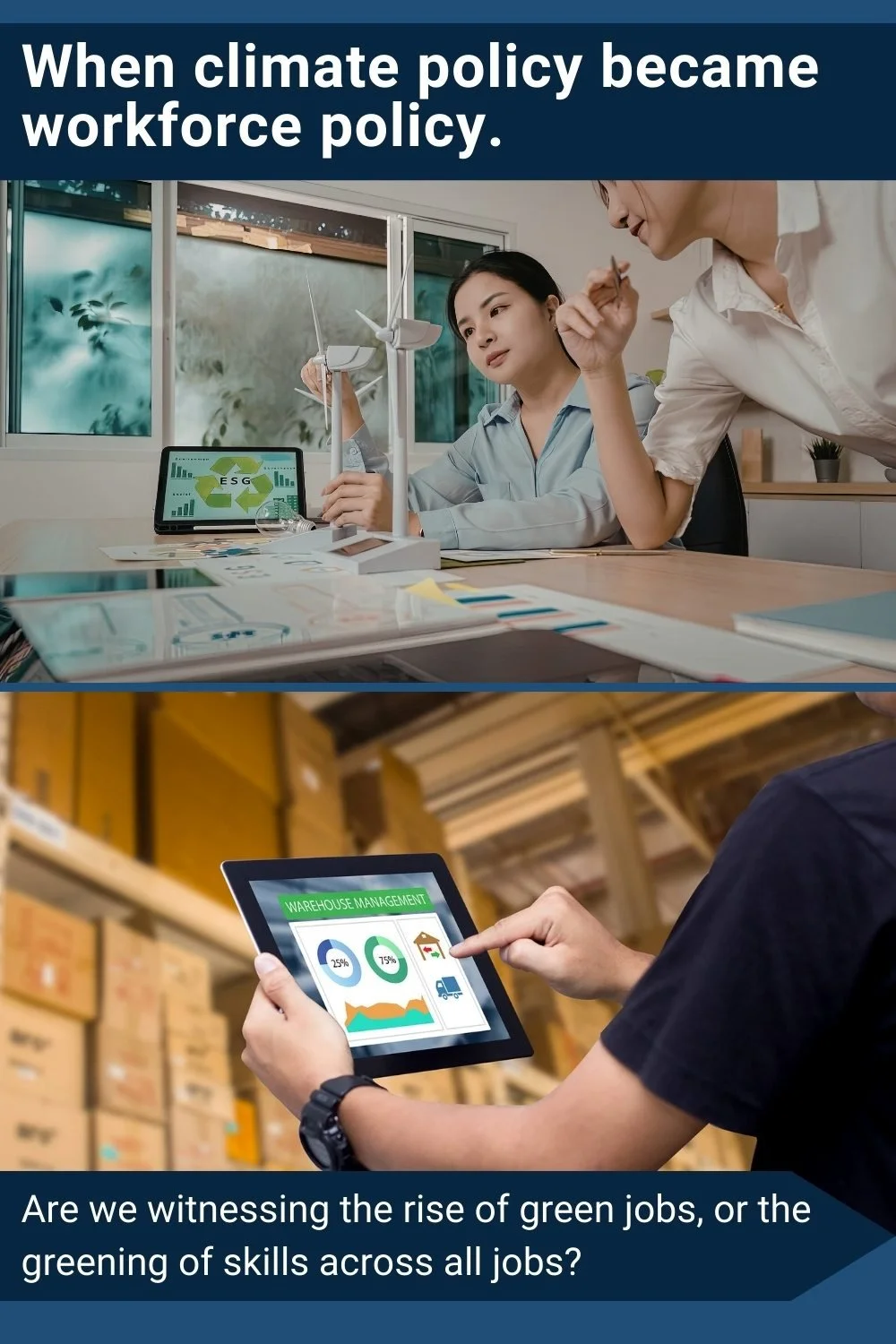
The Rise of the Green Jobs
Over the past decade, the idea of "green jobs" has moved to the centre of global policy discussions. Governments, development agencies, and international organisations increasingly promote the creation of employment linked to sustainability, climate action, and the transition to low-carbon economies.
The International Labour Organisation (ILO) defines green jobs as work that contributes to preserving or restoring the environment, whether through reducing emissions, improving energy efficiency, or protecting ecosystems.
Under this narrative, the future workforce will include growing numbers of renewable energy technicians, sustainable construction specialists, circular economy managers, and environmental analysts. Institutions such as the Organisation for Economic Co-operation and Development (OECD) also emphasise that the shift toward greener economies will reshape labour markets and create demand for new, environmentally focused occupations.
This perspective has helped bring sustainability into workforce planning and education policy. It signals that environmental transition is not just an environmental issue, but an economic and employment challenge. But it also raises a deeper question.
If sustainability affects every industry, supply chain, and production process, are we really witnessing the rise of green jobs? Or are we witnessing a need to green the skills required across all jobs?
That distinction may fundamentally reshape how we think about competence, training, and qualifications in the years ahead.
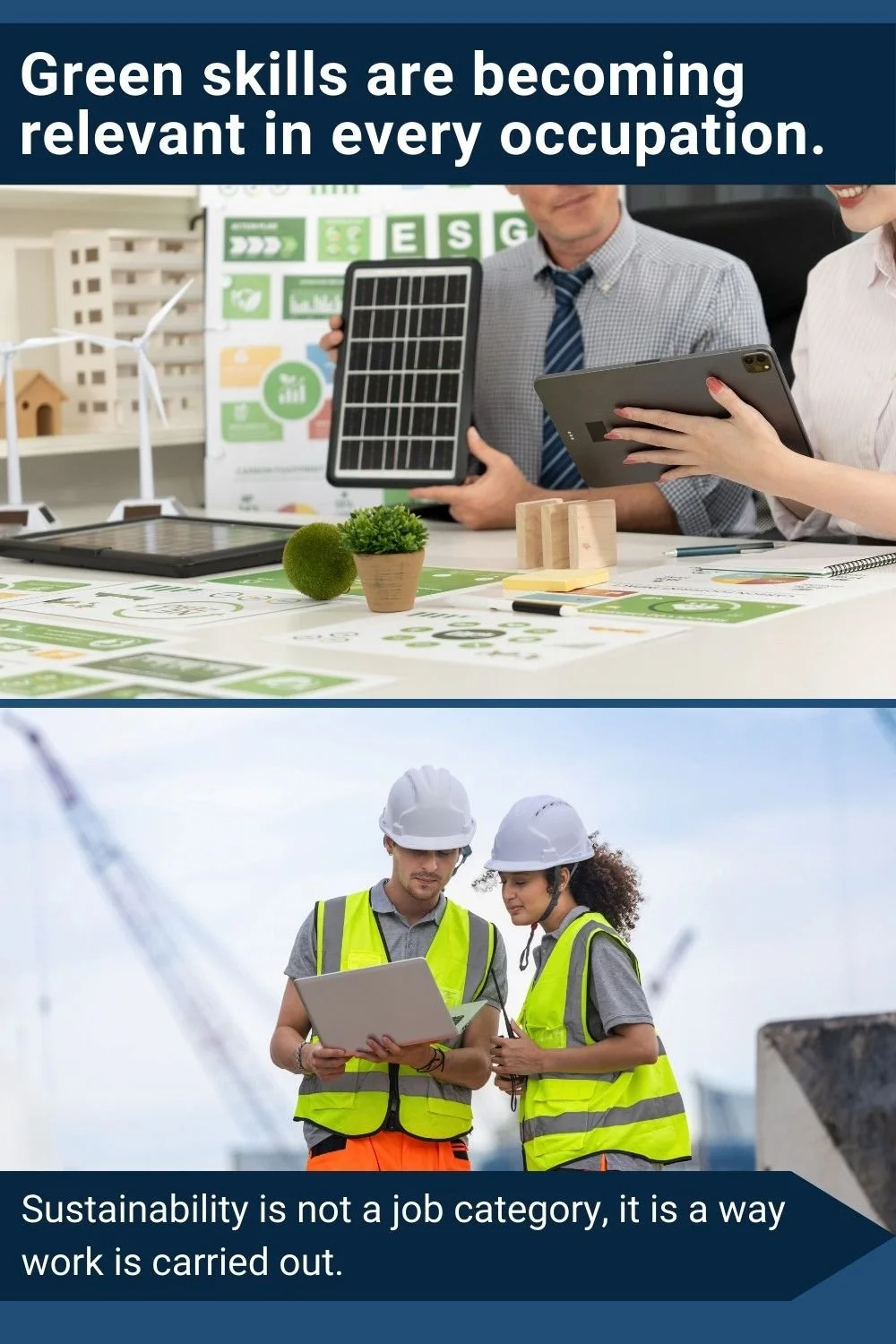
Green Jobs or Greening All Jobs?
While the rise of green jobs has helped bring sustainability into workforce planning, the concept can sometimes give the impression that environmental responsibility sits within a small group of specialised occupations.
In reality, environmental impact is rarely confined to a single job role or sector.
Construction workers influence the energy performance of buildings. Engineers make decisions that affect resource efficiency and emissions. Logistics managers determine how goods move through supply chains. Agricultural workers shape land use, water consumption, and biodiversity outcomes. Even office-based professionals influence procurement choices, energy use, and organisational practices.
In other words, sustainability is not just about what jobs exist, but about how work is carried out across the entire economy.
Research from the European Centre for the Development of Vocational Training (CEDEFOP) highlights that the green transition will require both the creation of new occupations and the adaptation of existing ones through updated skills and practices.
This suggests the real challenge may not be simply preparing workers for new "green" roles, but ensuring that environmental awareness and sustainable practices are embedded in everyday professional activities.
If this is the case, the focus of education and training systems needs to shift.
Rather than focusing primarily on preparing workers for a limited number of green occupations, the priority must be that green skills underpin work across all sectors of the economy.
And once we begin to view the ecological transition through this lens, a deeper question emerges: Are our current models of competence actually designed to capture the kind of responsible decision-making that sustainability demands?
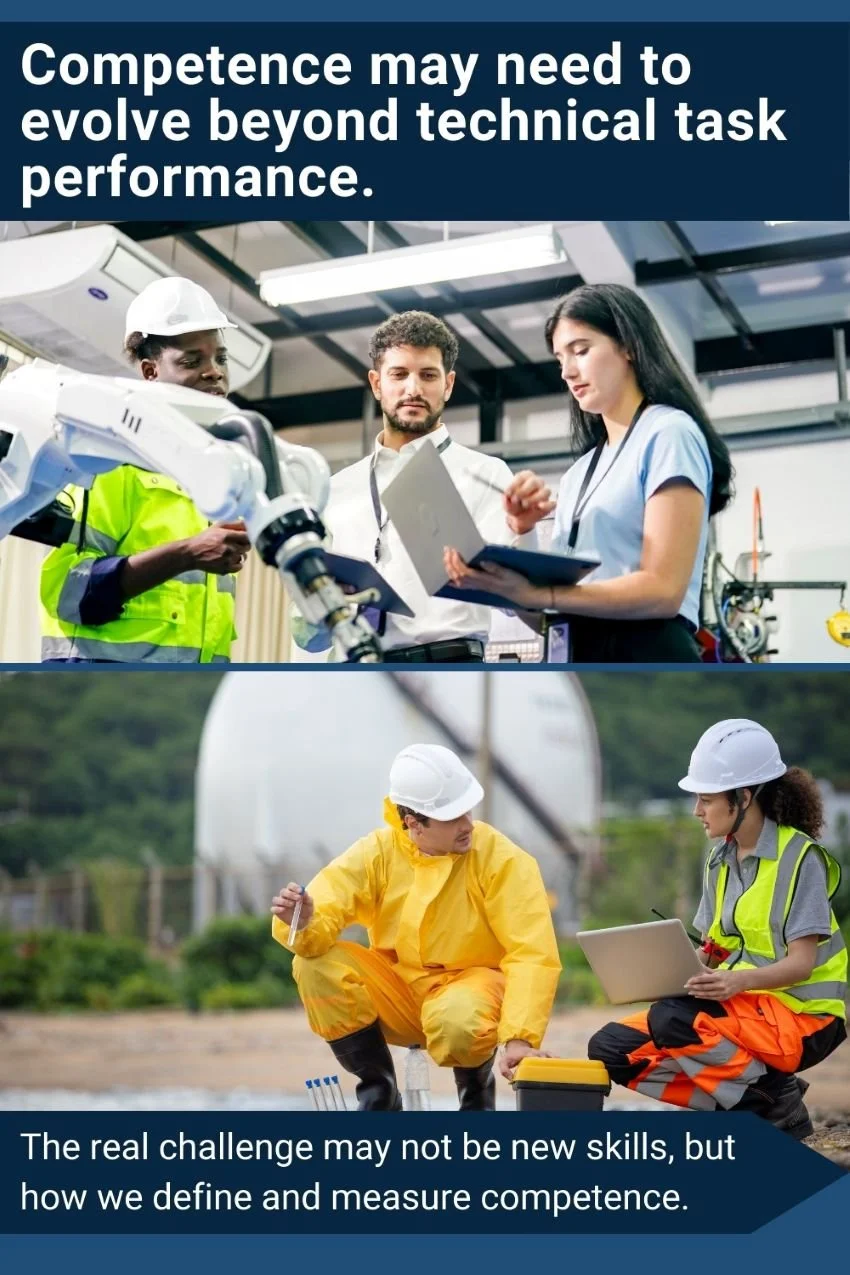
The Competence Question
For decades, education and training systems have relied on a relatively simple formula to describe professional capability: Knowledge + Skills = Competence.
This idea sits at the heart of many vocational education and training systems, shaping how qualifications are designed, how occupational standards are written, and how learning outcomes are assessed.
Frameworks such as the European Qualifications Framework describe competence as the ability to apply knowledge and skills, along with personal, social, and/or methodological abilities, in work or study contexts.
In theory, this definition already recognises that professional capability goes beyond technical knowledge and practical skills. It includes judgment, responsibility, and the ability to act independently.
In practice, however, competence is often assessed primarily through task performance. If a learner can demonstrate a procedure or complete a work activity to the required standard, they are considered competent.
But this raises an important question in the context of an ecological transition. A worker may perform a task correctly, follow established procedures, and meet all technical requirements — yet the broader environmental consequences of that task may never be considered.
From this perspective, competence cannot simply mean performing tasks efficiently. It must also include the ability to understand wider impacts, anticipate consequences, and make responsible decisions in complex systems.
If sustainability is becoming a defining challenge of modern economies, then the way we define and assess competence also needs to evolve.
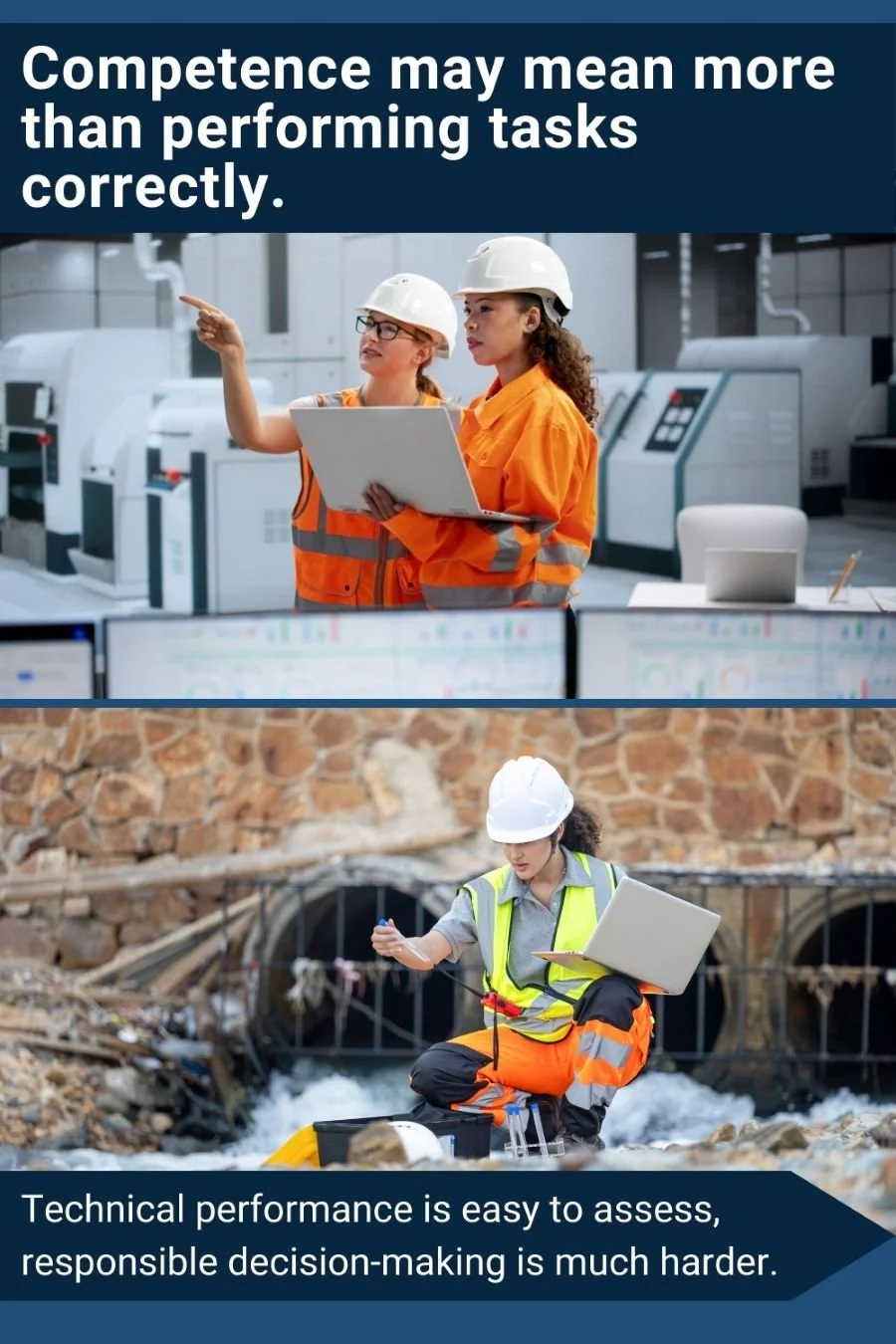
Are We Certifying Competence or Compliance?
If competence is meant to include responsibility and autonomy, an uncomfortable question arises: Are education and training systems truly assessing these dimensions, or are they primarily measuring whether learners can follow procedures correctly?
In many vocational assessment systems, competence is demonstrated through the successful completion of specific tasks or activities. Learners show that they can perform a process, operate equipment, or complete a work activity according to established standards.
This approach works well for verifying technical capability. But it can sometimes blur the line between competence and compliance.
A worker may perform a task exactly as instructed and still contribute to environmentally unsustainable outcomes. A process may be executed efficiently but still involve unnecessary energy consumption, material waste, or environmental impact. In such cases, technical performance alone does not necessarily reflect responsible professional practice.
As industries respond to climate change, technological disruption, and resource pressures, workers' expectations are also evolving. The World Economic Forum highlights that employers increasingly value capabilities such as analytical thinking, systems thinking, environmental awareness, and adaptability alongside technical skills. These capabilities are difficult to measure through simple task-based assessments.
If the ecological transition requires professionals to consider wider environmental consequences, then competence must extend beyond performing tasks correctly. It must also include the ability to interpret information, understand system impacts, and make responsible decisions within complex environments.
This raises a deeper question for education and training systems: Are we certifying what people can do, or certifying how they think, decide, and act responsibly in their professional roles?
Skills, Qualifications and the Pace of Change
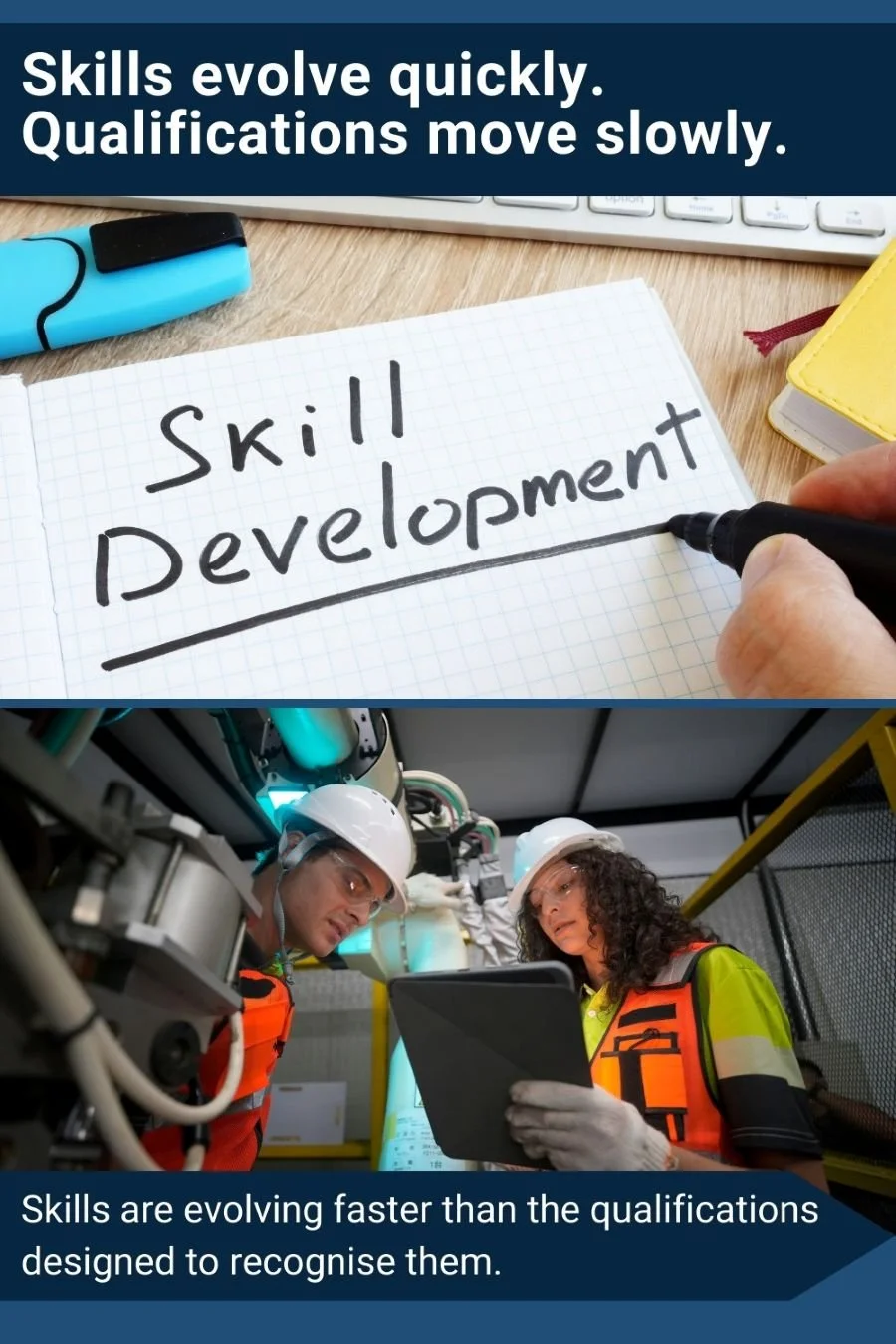
Another challenge facing education and training systems is the rapid evolution of skills requirements.
Traditional qualifications often follow long development and delivery cycles. A degree programme, for example, may take three or four years to complete, with curricula designed and approved well before students begin their studies. By the time learners graduate, some of the technologies, practices, or regulatory frameworks they studied may already have changed.
At the same time, industries are experiencing rapid technological shifts driven by digitalisation, automation, and the transition to more sustainable production systems. As a result, many employers increasingly prioritise demonstrable skills and practical capability over the duration or title of a qualification.
This tension has contributed to the rise of shorter, more flexible learning formats, such as modular training and micro-credentials. Organisations such as UNESCO highlight the growing role of micro-credentials in supporting lifelong learning and helping workers update their skills more quickly in response to changing labour market demands.
These developments suggest that training systems are becoming more agile. Workers are expected to continuously update their skills rather than rely on a single qualification earned earlier in their careers.
Yet qualifications still serve important functions. They provide structure for learning pathways, signal credibility to employers, and support the recognition of professional capability across sectors and countries.
The real challenge may therefore not be choosing between skills and qualifications, but ensuring that education systems can combine the stability of qualifications with the agility of continuous skills development.
And in an ecological economy, where industries must adapt rapidly to environmental pressures, this balance becomes even more critical.
Beyond Green Jobs: Towards Ecological Capability
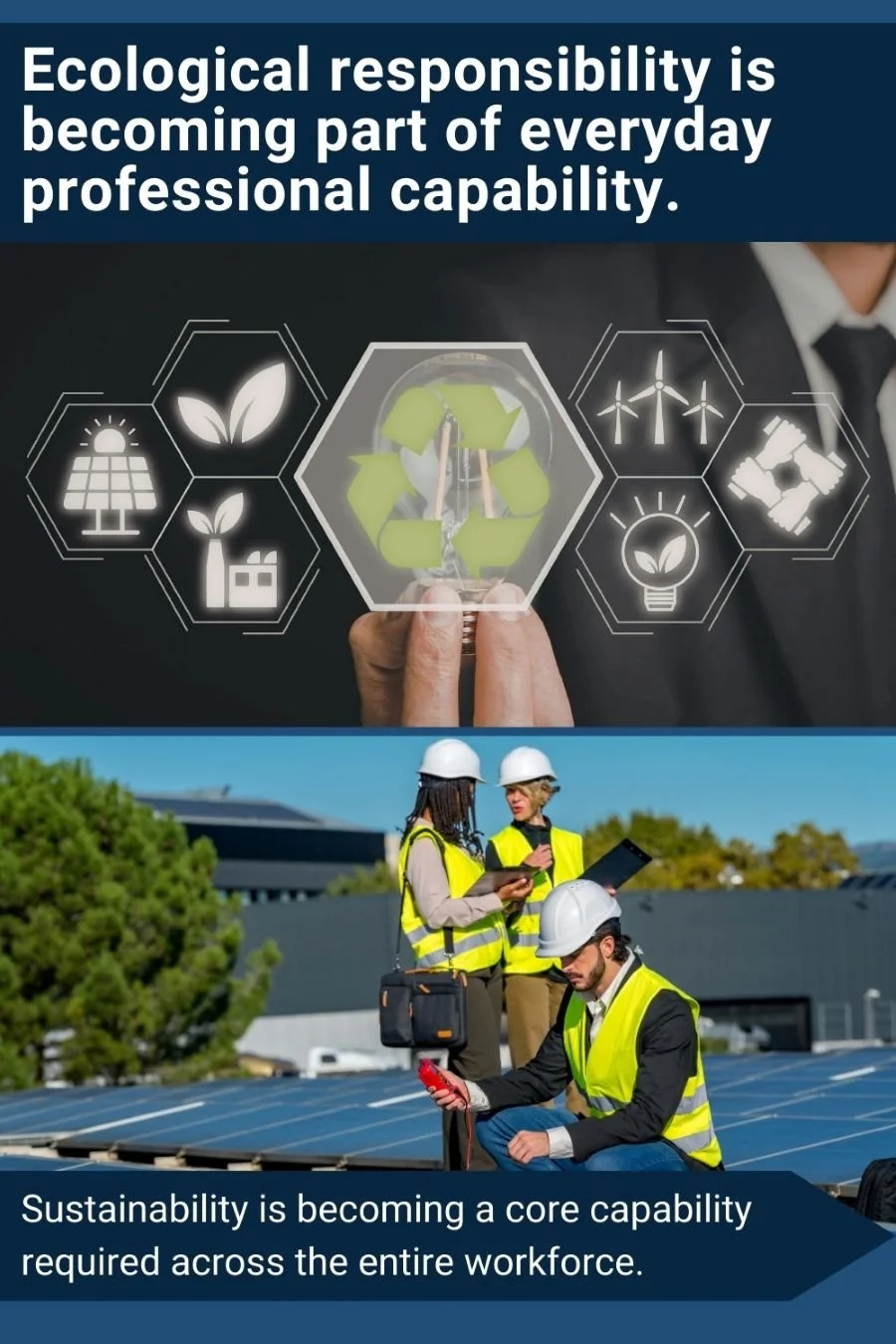
If sustainability is reshaping industries, supply chains, and production systems, the real transformation may not lie in creating a small group of "green jobs" but in developing ecological capability across the entire workforce.
Workers in almost every sector make decisions that affect energy use, material consumption, waste generation, and environmental impact. Whether designing infrastructure, managing logistics, operating industrial equipment, or planning agricultural production, everyday professional activities increasingly influence environmental outcomes. This suggests that the ecological transition requires more than new occupations. It requires a shift in how people understand the systems within which they work.
Research from the European Centre for the Development of Vocational Training (CEDEFOP) indicates that the green transition will involve both the emergence of new occupations and the adaptation of existing ones through updated skills and knowledge related to sustainability.
In this context, competence may need to evolve beyond the ability to perform tasks effectively. It may also need to reflect the capacity to understand wider environmental implications, anticipate consequences, and make responsible decisions within complex systems.
Developing this kind of capability requires education and training systems to integrate sustainability thinking across disciplines, rather than treating it as a specialised field limited to a handful of occupations.
If the ecological transition affects the entire economy, the skills required to support it must also be embedded across the entire workforce.
Rethinking What We Certify
For decades, education and training systems have focused on certifying what people know and what they can do. Knowledge and skills have formed the foundation of qualifications, occupational standards, and competency frameworks worldwide.
Yet the transition towards a more sustainable and technologically complex economy is challenging these traditional assumptions.
If sustainability affects every industry, the real challenge may not be simply preparing workers for a limited number of green occupations. Instead, it may be about ensuring that environmental awareness, responsible decision-making, and systems thinking become part of the skills expected across all professions.
This does not mean abandoning the concept of competence. Rather, it means recognising that competence may need to evolve beyond technical task performance to include broader professional responsibility within complex ecological and technological systems. Education and training systems, therefore, face an important question.
Are we designing learning programmes that simply teach people how to perform tasks, or are we preparing professionals who can understand consequences, make responsible decisions, and adapt to changing environmental realities?
As the transition to a greener economy accelerates, this question will become increasingly important for educators, policymakers, and industry leaders alike.
Perhaps the real challenge is not creating more green jobs, but ensuring that the skills required across all jobs reflect the ecological realities of the modern world.
What do you think? Should education systems focus on developing new green occupations, or should the priority be embedding ecological awareness and responsibility across all professional skills?
I'd be very interested to hear your perspective. Feel free to share your thoughts or experiences in the comments and join the conversation.