SCADA and Smart Water Systems Technician NOS Units
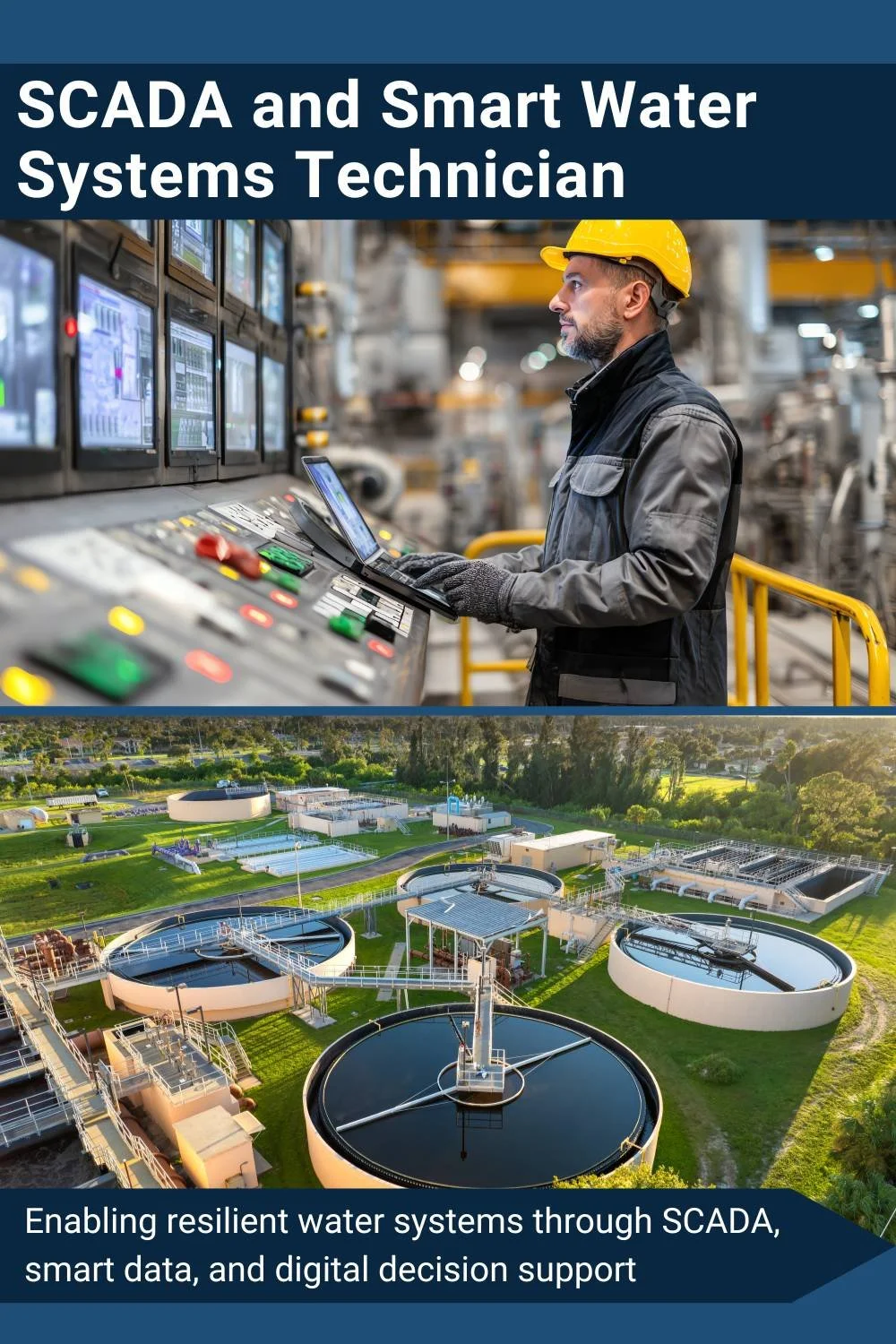
SCADA and Smart Water Systems Technicians play a critical role in enabling safe, reliable, and efficient water and wastewater operations through digital monitoring and control. Working across control rooms, treatment facilities, and network operations, they support the operation of SCADA platforms, smart water systems, telemetry, and digital decision-support tools that provide real-time visibility of system performance. The occupation requires strong digital competence, disciplined operational practice, and the ability to work within authorised limits while supporting system resilience, cybersecurity, and environmental performance.
The following NOS units for this occupation focus on developing the applied skills and operational capabilities required to support modern, digitally enabled water systems. The units cover key areas such as SCADA operation and monitoring, real-time data integrity, communications and telemetry support, first-line fault diagnosis, pressure and asset performance monitoring, cybersecurity controls, AI-enabled decision support, system configuration support, field device inspection, operational reporting, and continuous improvement. Together, they prepare SCADA and Smart Water Systems Technicians to support data-driven operations, enhance situational awareness, contribute to system reliability, and play an active role in the digital transformation of the water sector.
CLICK on ANY of the LINKS Below and Download for FREE. You are welcome to amend any of the PDFs. If you want the MS Word version, get in touch.
NOS Units
Unit 1 Operate and Monitor SCADA and Smart Water Systems: Focuses on operating SCADA platforms and smart water dashboards to monitor and control water and wastewater assets in real time within authorised limits.
Unit 2 Monitor Operating Parameters and Alarms: Addresses continuous monitoring of operating parameters, alarms, and system indicators using control panels and monitoring systems.
Unit 3 Interpret SCADA Dashboards and System Visualisations: Focuses on interpreting dashboards, trends, maps, and visual system displays to understand real-time system performance, identify emerging issues, and support informed operational decision-making.
Unit 4 Confirm Abnormal Operating Conditions: Covers confirming deviations from normal operating conditions through data review, visual checks, and verification against operating limits.
Unit 5 Support Real-Time Data Acquisition and Integrity: Addresses verifying the accuracy, continuity, and reliability of data from sensors, meters, PLCs, and RTUs to support dependable operations.
Unit 6 Monitor and Support SCADA Communications and Telemetry: Focuses on monitoring communication links and telemetry systems to detect data loss, signal failures, and connectivity issues affecting system visibility.
Unit 7 Record Operational Data and System Events: Covers accurate recording of operational data, alarms, interventions, and system events within digital logging and reporting systems.
Unit 8 Prepare Shift Handover Information: Prepares shift handover information to ensure continuity of operations across shifts.
Unit 9 Carry Out First-Line Fault Identification and Diagnosis: Focuses on identifying common system faults such as communication failures, sensor issues, and data anomalies within authorised technical limits.
Unit 10 Escalate Abnormal Operating Conditions: Covers escalation of non-routine or abnormal conditions beyond operator authority to supervisors or technical personnel.
Unit 11 Monitor Pressure, Flow, and Asset Performance Data: Develops skills to monitor network performance indicators to support leakage detection, asset condition awareness, and operational control.
Unit 12 Monitor Resource Consumption and Efficiency: Focuses on monitoring energy, chemical, and water consumption to assess operational efficiency.
Unit 13 Support Efficiency and Asset Protection: Covers supporting actions that improve operational efficiency, protect assets, and extend equipment life.
Unit 14 Support Authorised System Configuration and Updates: Addresses supporting approved system configuration changes, parameter adjustments, and software or firmware updates under change-control procedures.
Unit 15 Apply Cybersecurity and System Access Controls: Focuses on applying access controls, secure operating practices, and basic cybersecurity measures to protect SCADA and smart water systems.
Unit 16 Apply Health, Safety, and Environmental Controls: Covers the application of occupational health, safety, and environmental controls required for desalination and water treatment operations, including chemical handling, safe systems of work, and environmental protection measures.
Unit 17 Respond to Emergency and Environmental Incidents: Addresses response actions for emergencies and environmental incidents, including alarms, spills, abnormal discharges, and escalation in accordance with procedures.
Unit 18 Coordinate Operational Activities: Covers the coordination of routine operational activities with other operators and maintenance teams.
Unit 19 Support Fault Investigation and Resolution: Addresses supporting fault investigation and resolution by providing operational information and observations.
Unit 20 Inspect and Verify SCADA Field Devices: Develops the ability to inspect and verify the condition and performance of field devices such as sensors, meters, PLCs, and RTUs to ensure reliable data collection.
Unit 21 Apply AI-Enabled Decision-Support Tools: Focuses on using AI-supported analytics, predictive alerts, and anomaly detection tools to support informed operational decisions.
Unit 22 Contribute to Continuous Improvement of Digital Water Systems: Covers providing operational feedback and insights to support ongoing improvement of system reliability, performance, and digital capability.