Wastewater Treatment Technician NOS Units
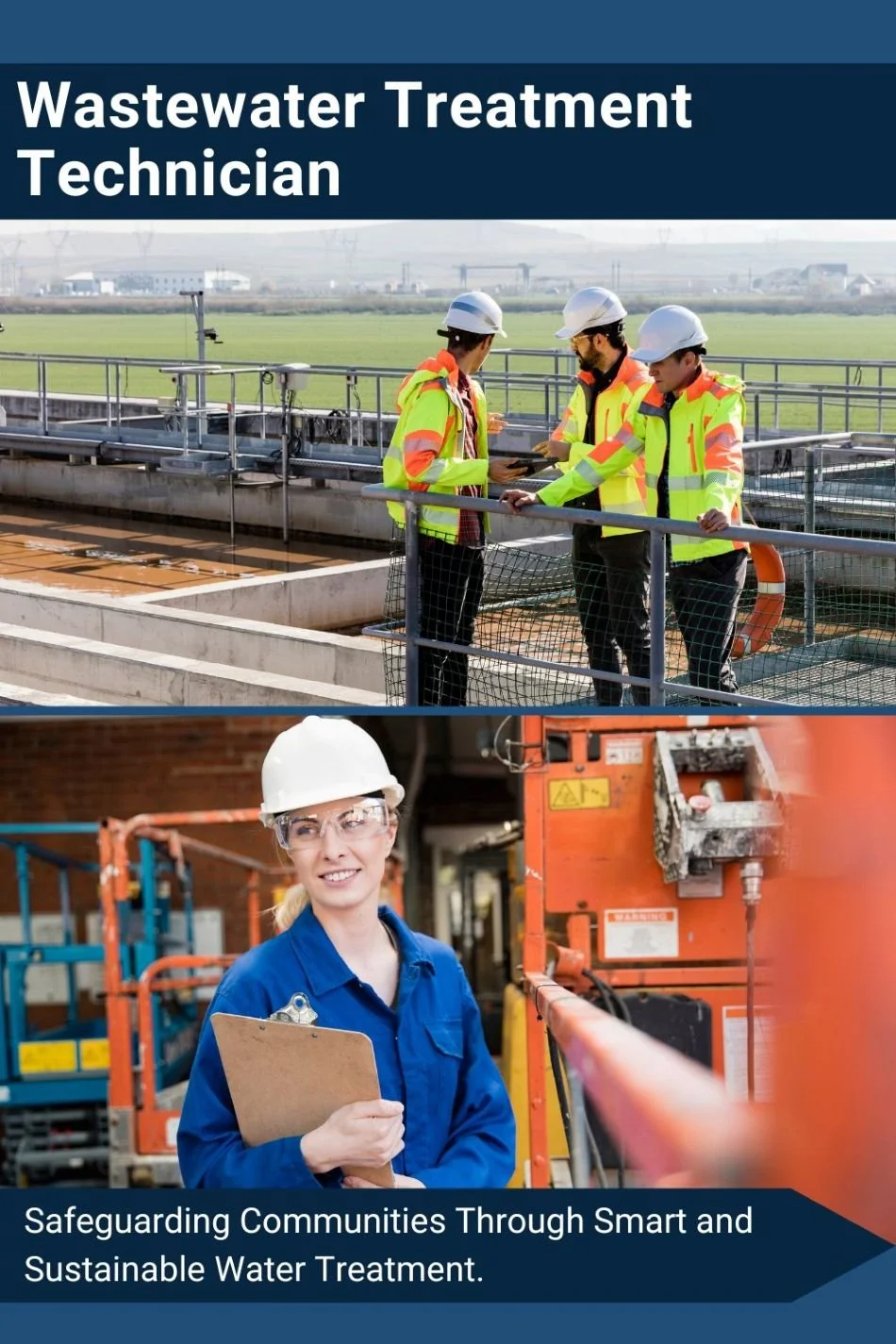
Wastewater Treatment Technicians play a critical role in protecting public health, safeguarding water resources, and supporting environmental sustainability. Working across mechanical, biological, and chemical treatment systems, they operate and monitor complex processes that remove contaminants, manage sludge, and ensure treated effluent meets regulatory and environmental standards. Their work underpins resilient infrastructure and responsible water stewardship in both urban and industrial contexts.
In modern facilities, the role extends beyond routine plant operation. Technicians interpret digital performance data, support energy-efficient operation, contribute to climate resilience strategies, and apply proactive environmental protection measures. From process stability and solids management to overflow prevention and pollution control, they ensure wastewater systems remain reliable, compliant, and sustainable in an increasingly climate-sensitive world.
CLICK on ANY of the LINKS Below and Download for FREE. You are welcome to amend any of the PDFs. If you want the MS Word version, get in touch.
NOS Units
Unit 1 Apply Health, Safety, and Environmental Controls: Covers the implementation of health, safety, and environmental controls in wastewater treatment facilities, including confined spaces, hazard management, gas monitoring, safe working practices, and environmental protection measures.
Unit 2 Coordinate Operational Activities: Focuses on coordinating routine operational tasks with plant operators, maintenance teams, laboratory personnel, and supervisors to ensure safe, efficient, and continuous wastewater treatment operations.
Unit 3 Record Operational Data and Test Results: Covers the accurate recording of operational parameters, sampling results, alarms, incidents, and maintenance observations in logbooks, CMMS, or digital reporting systems to ensure traceability, regulatory compliance, and informed decision-making.
Unit 4 Prepare Shift Handover Information: Develops the ability to prepare accurate and structured shift handover information, including plant status, ongoing issues, alarms, maintenance activities, and compliance considerations to ensure operational continuity.
Unit 5 Operate Wastewater Treatment Processes: Covers the operation of mechanical, biological, and chemical wastewater treatment stages, including screening, aeration, sedimentation, digestion, and disinfection, to maintain stable and compliant treatment performance.
Unit 6 Control and Stabilise Biological Treatment Systems: Focuses on maintaining biological process stability through control of dissolved oxygen levels, sludge age, return activated sludge rates, and nutrient removal processes within authorised limits.
Unit 7 Monitor and Adjust Process Parameters: Develops competence in monitoring key operational parameters and making authorised adjustments to aeration rates, hydraulic loading, chemical dosing, and sludge flows to maintain process efficiency and discharge compliance.
Unit 8 Monitor Wastewater Pumping Stations and Inlet Structures: Addresses monitoring of wet wells, pumping stations, and inlet systems to manage hydraulic loading, prevent blockages and overflows, and support resilient plant operation during variable inflow conditions.
Unit 9 Monitor Operating Parameters and Alarms: Covers continuous monitoring of process indicators, instrumentation readings, and digital alarms using control panels and SCADA systems to ensure stable and compliant operation.
Unit 10 Confirm Abnormal Operating Conditions: Develops the ability to verify deviations from normal operating conditions through data review, visual inspection, and comparison against authorised operating limits.
Unit 11 Monitor Effluent Quality and Discharge Compliance: Focuses on verifying effluent performance against regulatory discharge standards, interpreting test results, and supporting actions to maintain environmental compliance.
Unit 12 Interpret Process Trends and Predictive Alerts: Addresses interpretation of digital performance trends, historical data, and predictive or anomaly-detection alerts to support early identification of process instability and informed operational decision-making.
Unit 13 Inspect Wastewater Treatment Systems: Covers routine inspection of treatment units, tanks, pumps, blowers, and associated infrastructure to verify operational condition and identify visible abnormalities or deterioration.
Unit 14 Assess Equipment Condition and Process Stability: Develops skills to assess equipment wear, process imbalance indicators, and early signs of operational instability affecting treatment performance.
Unit 15 Collect and Analyse Wastewater Samples: Covers the collection of influent, process, and effluent samples and the performance of routine field tests to verify treatment effectiveness, operational control, and compliance with discharge standards.
Unit 16 Operate Sludge Thickening and Dewatering Systems: Focuses on operating sludge processing equipment, including thickeners and dewatering units, to manage solids efficiently and in accordance with environmental requirements.
Unit 17 Monitor Sludge Handling, Storage, and Transfer: Develops competence in monitoring sludge storage, transfer, and disposal or reuse processes to ensure safe handling, environmental protection, and compliance.
Unit 18 Respond to Alarms and Process Deviations: Covers responding to routine alarms and operational deviations within authorised limits to restore stable plant performance.
Unit 19 Escalate Abnormal Operating Conditions: Addresses the identification and escalation of non-routine or high-risk operational conditions beyond a technician's authority to appropriate supervisory or specialist personnel.
Unit 20 Respond to Emergency and Environmental Incidents: Develops the ability to respond to emergencies such as spills, overflows, equipment failures, or abnormal discharges in accordance with approved procedures and environmental protection requirements.
Unit 21 Prepare Systems for Maintenance: Covers preparing and isolating plant systems safely for maintenance activities within authorised boundaries.
Unit 22 Support Post-Maintenance Checks: Focuses on supporting operational checks and controlled recommissioning following maintenance to confirm readiness for service return.
Unit 23 Support Fault Investigation and Resolution: Develops skills to provide operational data, observations, and process context to support structured fault investigation and corrective action.
Unit 24 Monitor Resource Consumption and Efficiency: Covers monitoring energy, chemical usage, hydraulic loading, and other resource indicators to assess operational efficiency and environmental performance.
Unit 25 Support Efficiency and Asset Protection: Focuses on supporting actions that improve plant reliability, extend equipment life, and reduce unnecessary resource consumption.
Unit 26 Support Environmental Protection and Climate Resilience: Develops awareness of environmental protection measures, overflow prevention strategies, energy-conscious operation, and climate-related risk management within wastewater treatment facilities.